Case Studies

Peter Justin Yu

Infant retail is unforgiving. Margins are thin, competition is constant, and the products parents need don't exactly follow a predictable seasonal rhythm. For Baby Village, a well-established online retailer for baby essentials, the challenge wasn't getting traffic. ProfitPeak was on hand figuring out how to spend more on advertising without quietly bleeding profitability in the process.
Every time they tried to scale the budget, something gave way: diminishing returns, or worse, a spike in sales for their lowest-margin products. ROAS looked fine on paper. The business underneath it told a different story.
Digital Marketing Manager Julien Darmanthé says the turning point was structural:
"I believe the standout change was definitely the restructure of our Google Ads account using ProfitPeak's product tagging. That really shifted performance for us. It's made our advertising incredibly dynamic and product-led, and honestly feels like a very advanced and scalable way to approach bidding and allocation."
The actual problem: optimising for the wrong number
Baby Village's team was chasing ROAS. It's a reasonable instinct as it's what the platforms show you, it's what agencies report on, and it's easy to understand. The problem is that ROAS doesn't tell you which sales actually made money. You can hit a great ROAS number while spending most of your budget pushing products that barely cover their costs.
What they needed was profit visibility at the product level — not revenue, not clicks, not attributed conversions. Which products were actually worth scaling?
What changed
Baby Village brought in ProfitPeak to rebuild their Google campaign strategy from the ground up. The shift was straightforward in concept, harder to execute without the right data: stop optimising for platform-reported ROAS and start optimising for PROAS (Profit Return on Ad Spend).
ProfitPeak's Product Intelligence segmented their catalogue automatically, flagging which products had the margins worth pushing. Those tags fed directly into their Shopify product feed, which meant campaign bidding and budget allocation were now weighted toward the products that actually moved the needle on profit, not just revenue.
With that visibility in place, the team did something that would have felt reckless before: they scaled aggressively. But this time they knew exactly what they were scaling.
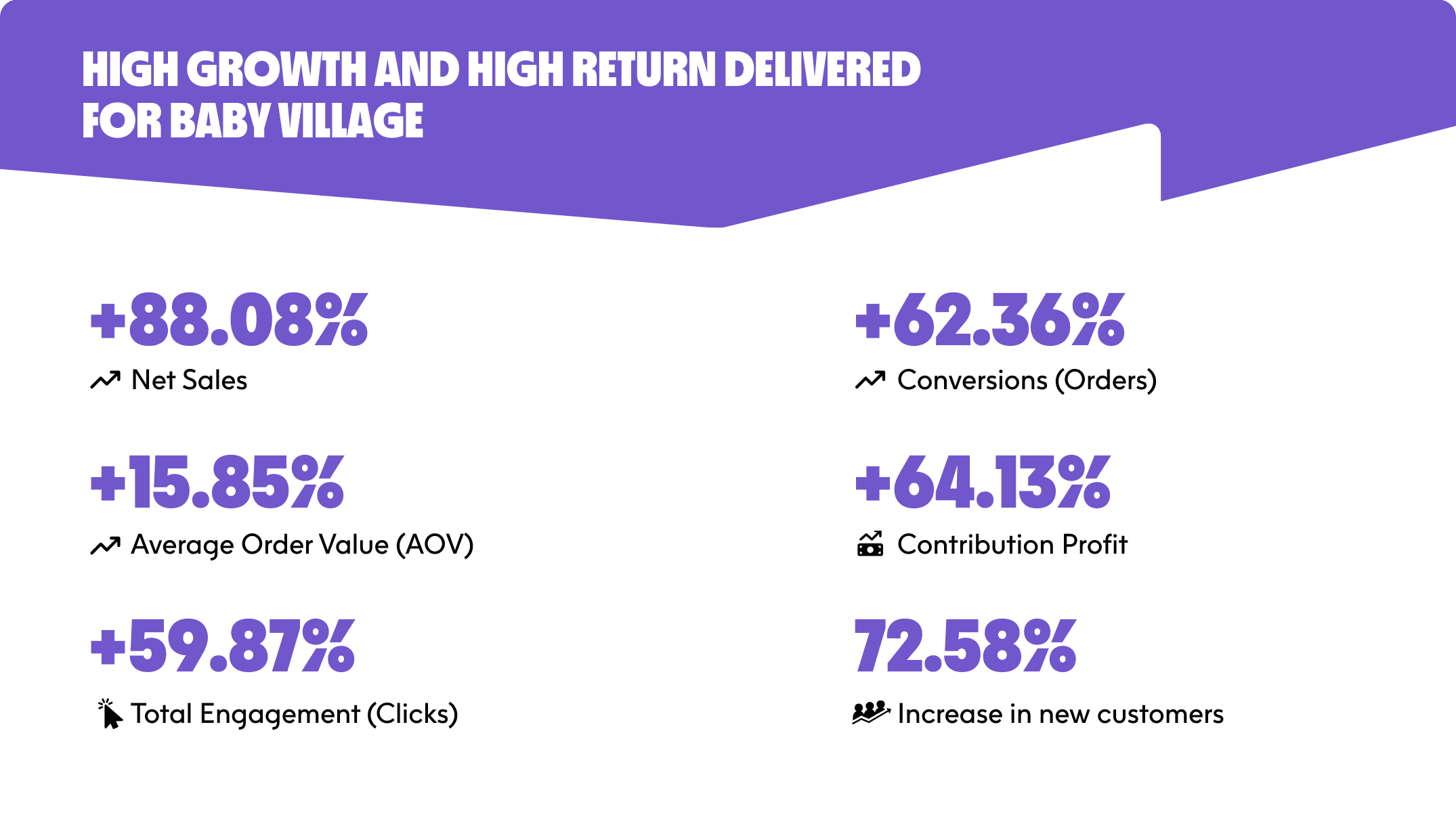
The numbers, from Black Friday Cyber Monday
Compared to the month prior:
Contribution profit up 64%
Net sales up 88%
Orders up 62%
Average order value up 16%
New customers up 73%
Those aren't vanity metrics tidied up for a case study. Contribution profit going up 64% while revenue goes up 88% means the quality of the growth held. That's the part that usually breaks when you push spend hard.
The takeaway
Baby Village didn't find a shortcut. They just stopped flying blind. When you know which products are profitable and your campaigns are built around that, scaling stops being a gamble.
Peter Justin Yu
Founding Marketer
Peter is a veteran marketer with more than 15 years in tech - securing three successful startup exits by amplifying game-changing businesses across APAC through digital storytelling.